
The best couch co op games do something online multiplayer cannot quite replace: they turn every missed jump, last second save, and poorly timed button press into a moment everyone in the room owns. A great shared screen game is not just about how many players it supports. It needs readable action, forgiving ways to recover, and enough personality to keep the quieter person on the controller interested.

This is a practical selection for PC and console players looking for games that are enjoyable in the same room, whether the group wants ten loud minutes between dinner and a movie or a campaign that lasts several weekends. Platform availability and local player options can differ by edition, so confirm the current store listing for the version you plan to buy before inviting everyone over.
What makes a couch co op game worth playing
The first question is not always, “What is the highest rated game?” It is, “Who is sitting on the couch?” A competitive racing game can be perfect for four friends who already play regularly and a frustrating pick for a parent, a younger sibling, and someone holding a controller for the first time.
The best games give each player a meaningful job while keeping failure funny rather than exhausting. They also avoid burying the session in setup. If the group has only an hour, a game with immediate rounds and clear controls is usually a better bet than an enormous adventure with several systems to explain.
Screen sharing matters too. Some games keep everyone in one view, while others split the display as players move apart. Neither approach is automatically better. A shared camera encourages teamwork, but it can leave one person waiting. Split screen gives people more freedom, though a smaller view can make fast action harder to follow.
The best couch co op games for most groups
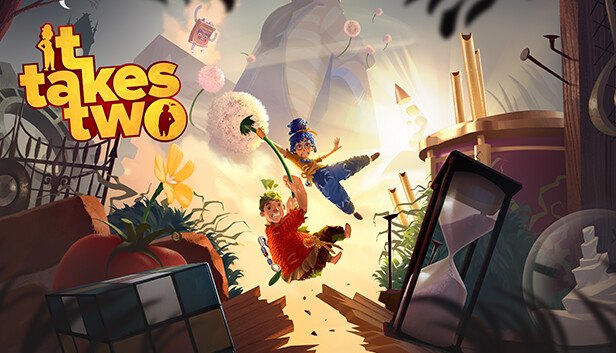
It Takes Two
It Takes Two is the rare cooperative adventure built around constant change. Two players work through a story campaign where the controls and objectives shift from chapter to chapter. One moment asks for careful platforming, another turns the pair into puzzle solvers, and another leans into a very different genre entirely.
That variety is its biggest strength. It gives couples and close friends plenty to talk about between sections, and it prevents either player from feeling like a permanent sidekick. The tradeoff is commitment. This is best for the same two people returning for multiple sessions, not a room where controllers change hands every twenty minutes.
Overcooked! All You Can Eat
Overcooked remains an easy recommendation when the goal is noisy, immediate group energy. Players prepare meals under time pressure while kitchens introduce obstacles that steadily turn basic teamwork into comic disaster. The controls are approachable, but good communication quickly becomes essential.
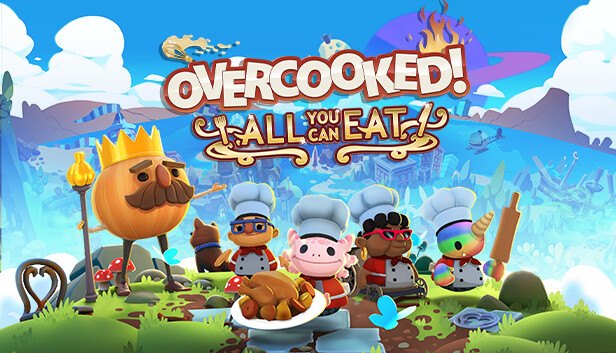
It is a terrific party choice for people who can laugh at failure. It is less ideal for a group that takes score chasing personally, because the game is designed to create pressure. Set a relaxed expectation early and treat burned food as part of the show.
Mario Kart 8 Deluxe
Mario Kart 8 Deluxe is still one of the safest choices for mixed skill levels. Racing is instantly understandable, the races are short, and the item system gives players who are behind a chance to affect the final stretch. It also makes a good reset game after a longer, more demanding session.
Experienced players should resist the urge to optimize every turn when newcomers are present. The most memorable races are often the messy ones. Pick a cup, keep the rematch debate moving, and give every player a chance to choose a track.
Teenage Mutant Ninja Turtles: Shredder’s Revenge
Teenage Mutant Ninja Turtles: Shredder’s Revenge understands the appeal of an arcade style beat ’em up without treating it as a museum piece. It is colorful, quick to learn, and satisfying when a group clears a crowded screen together. The controls are direct enough that a new player can join without a long tutorial.
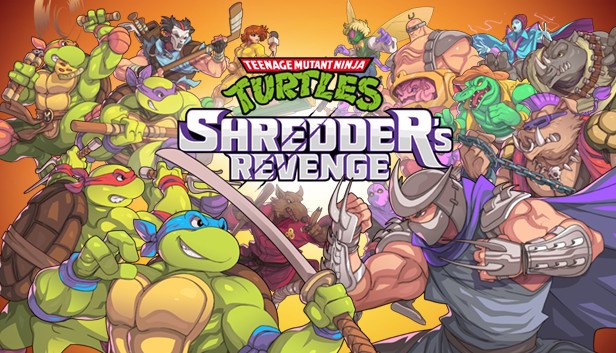
This is especially good for larger gatherings because a single stage has a natural beginning and end. There is no need to explain an elaborate build or memorize a lengthy mission. Players can enjoy the action, trade characters, and keep moving.
Streets of Rage 4
Streets of Rage 4 is the better pick when the group wants a more deliberate beat ’em up. Combat rewards spacing, timing, and knowing when to use a special move instead of simply attacking the nearest enemy. The presentation has enough style to make replaying stages feel purposeful.
Its difficulty can be sharper than Shredder’s Revenge, which is the main consideration. A group looking for casual button pressing may prefer the turtles. Players who enjoy learning a combat system together may find more staying power here.
Moving Out 2
Moving Out 2 takes the basic goal of carrying furniture from one place to another and makes it wonderfully inconvenient. Sofas get stuck in doorways, fragile items demand care, and the shortest route is rarely as simple as it looks. The physical comedy lands because everyone recognizes the plan falling apart in real time.
It works well as a companion to Overcooked, but the pace feels different. Instead of managing a kitchen line, players solve a loose spatial puzzle under pressure. It is a strong option for people who want cooperation without needing fast combat reflexes.
Couch co op campaigns for regular partners
Unravel Two
Unravel Two is a thoughtful choice for two players who prefer gentle communication over chaotic scoring. The paired characters are physically connected, so movement becomes a shared problem. Players need to consider where to climb, when to swing, and how to help the other person across a gap.
The game asks for patience, especially in later platforming sections, but it rarely feels like it is trying to embarrass a newcomer. Its quieter mood also makes it a useful palate cleanser after games built around shouting instructions.
Sackboy: A Big Adventure
Sackboy: A Big Adventure brings bright platforming and an inviting tone to a session that may include different ages or skill levels. Its levels are easy to read at a glance, and the playful presentation gives the group a reason to keep looking around rather than racing directly to the goal.
Like many platform games, it can become demanding when players want every optional collectible. That is not a flaw, but it is worth deciding what kind of night you want. Finish the levels first. Save the perfection runs for a group that actively wants the challenge.
Super Mario Bros. Wonder
Super Mario Bros. Wonder is a flexible choice for a Nintendo Switch gathering because it can support both casual forward progress and serious platforming. The game constantly changes the rules of a level with surprising effects, which gives spectators something to react to as well as players.
The practical challenge with any multiplayer Mario platformer is pace. One confident player can rush ahead while another is still learning a jump. Give newer players room to explore and treat the end of the level as a meeting point rather than a finish line someone must reach first.
Kirby and the Forgotten Land
Kirby and the Forgotten Land is a friendly gateway to cooperative play. Its bright 3D stages, simple attacks, and low intimidation factor make it suitable for newer players, younger players, or anyone who wants to relax rather than compete.
That accessibility is the point, not a limitation. A highly skilled group may want a tougher game after a few sessions, but the welcoming pace can be exactly right when the couch includes people with very different experience levels.
Competitive picks when cooperation gets too polite
Not every shared screen night needs a team objective. Super Smash Bros. Ultimate works when the group wants short rounds, recognizable characters, and constant chances for a rematch. Its wide range of settings lets a host keep the match approachable, though the game can become overwhelming if every modifier is turned on at once.
Mario Party Superstars is better for a longer, more social session. The board game structure gives everyone something to do even when they are not leading, and the minigames create regular changes of mood. Luck is part of the experience, which can either save a weaker player or irritate the person who wanted a pure contest.
Keep competitive games rotating. A player who loses several rounds should not have to watch for half an hour while the strongest two settle a rivalry. Short rounds and frequent controller swaps make a bigger difference than any character choice.
Choose the game for the room, not the genre
For two people who want a real campaign, start with It Takes Two, Unravel Two, or Sackboy: A Big Adventure. For a larger group with limited time, Overcooked! All You Can Eat, Moving Out 2, and Shredder’s Revenge get to the fun quickly. For a Nintendo Switch night that mixes regular players and newcomers, Mario Kart 8 Deluxe and Kirby and the Forgotten Land are difficult to beat.
Before the session, make sure there are enough controllers, that everyone can see the screen, and that the host knows how to add local players. Those unglamorous details prevent more frustration than choosing between two excellent games. The right couch co op game is the one that leaves the room arguing about a rematch, not about whose turn it was to play.
Follow GamingBroject on Google: add us as a preferred source




Community
0 comments