
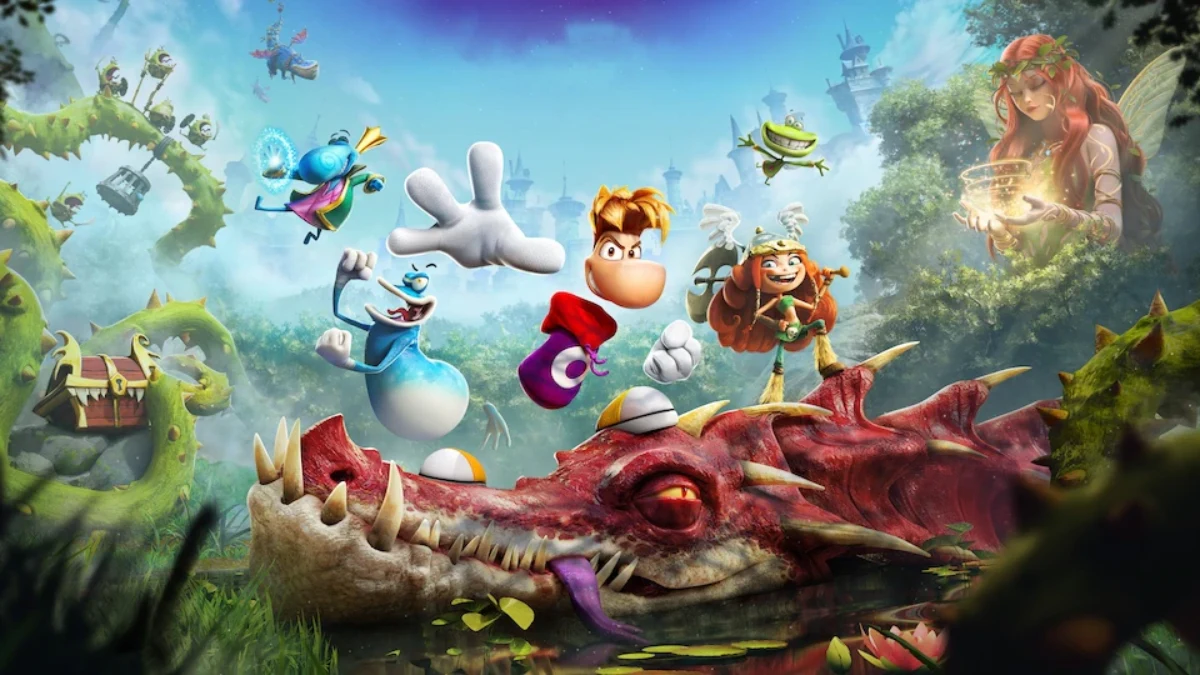
Senior UX Designer Andrea Scambia shares his insights on the accessibility design process, from meeting modern criteria to designing accessibility for dragon rides and musical levels.
Confirmed console details
- Rayman Legends Retold is launching for PlayStation, Xbox, PC, and Switch 2 on December 3. A reimagining of the 2013 classic, the upcoming platformer features a narrative with a new enemy stirring up trouble; new cinematics and upgraded 3D visuals; returning levels, a mysterious new realm, and four new musical stages; and pure platforming joy as you leap, glide, and punch your way through worlds on a legendary journey.
- How has accessibility evolved since the original Rayman Legends released?
- Subtitle customization was another important area of focus. Players can choose between three subtitle sizes (Small, Medium, and Large), adjust subtitle background opacity with options ranging from no background to 50% or 100% opacity, and enable speaker names to provide additional context and clarity during dialogue.
- Rayman Legends Retold is in 3D, while the original was in 2D. What opportunities and challenges does that extra dimension add in when considering accessibility?
- These features help players more easily recognize interactive objects, collectibles, enemies, the main path, and player characters. Highlights apply distinct colored outlines to objects, making their function immediately recognizable at a glance. High Contrast Mode goes a step further by applying color coding to entire gameplay elements while increasing the visual separation between interactive content and the background, resulting in a clearer and more readable presentation.
- The dragon rides in particular shift perspective and dimension quite a bit mid-flight. How do you approach accessibility for levels that are technologically more complex?
Official trailer
GamingBroject VideoWatch directly inside the article
Rayman Legends Retold release date, platforms and price
Rayman Legends Retold is developed by Ubisoft.
Rayman Legends Retold is coming to PC and Switch 2 on December 3, 2026.
Genre: Action, Adventure, Casual.
When we checked the Steam store on October 11, 2026, Rayman Legends Retold was listed at 39,99€.
View on Steam ↗Official source: Ubisoft News
Follow GamingBroject on Google: add us as a preferred source



Community
0 comments